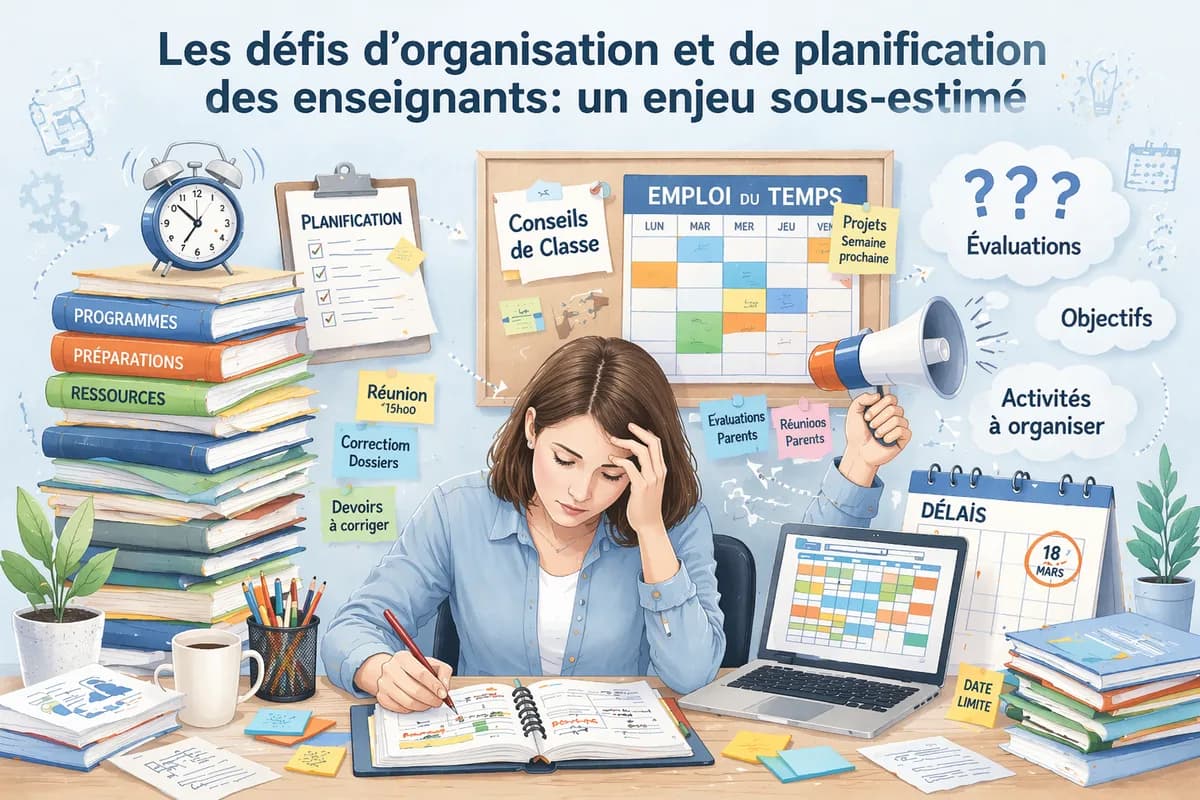
Teaching is often perceived as a profession centered on transmitting knowledge, supporting students, and preparing lessons. Yet behind every hour spent in the classroom lies a wide range of organizational and administrative tasks that take up a major part of teachers' daily work.
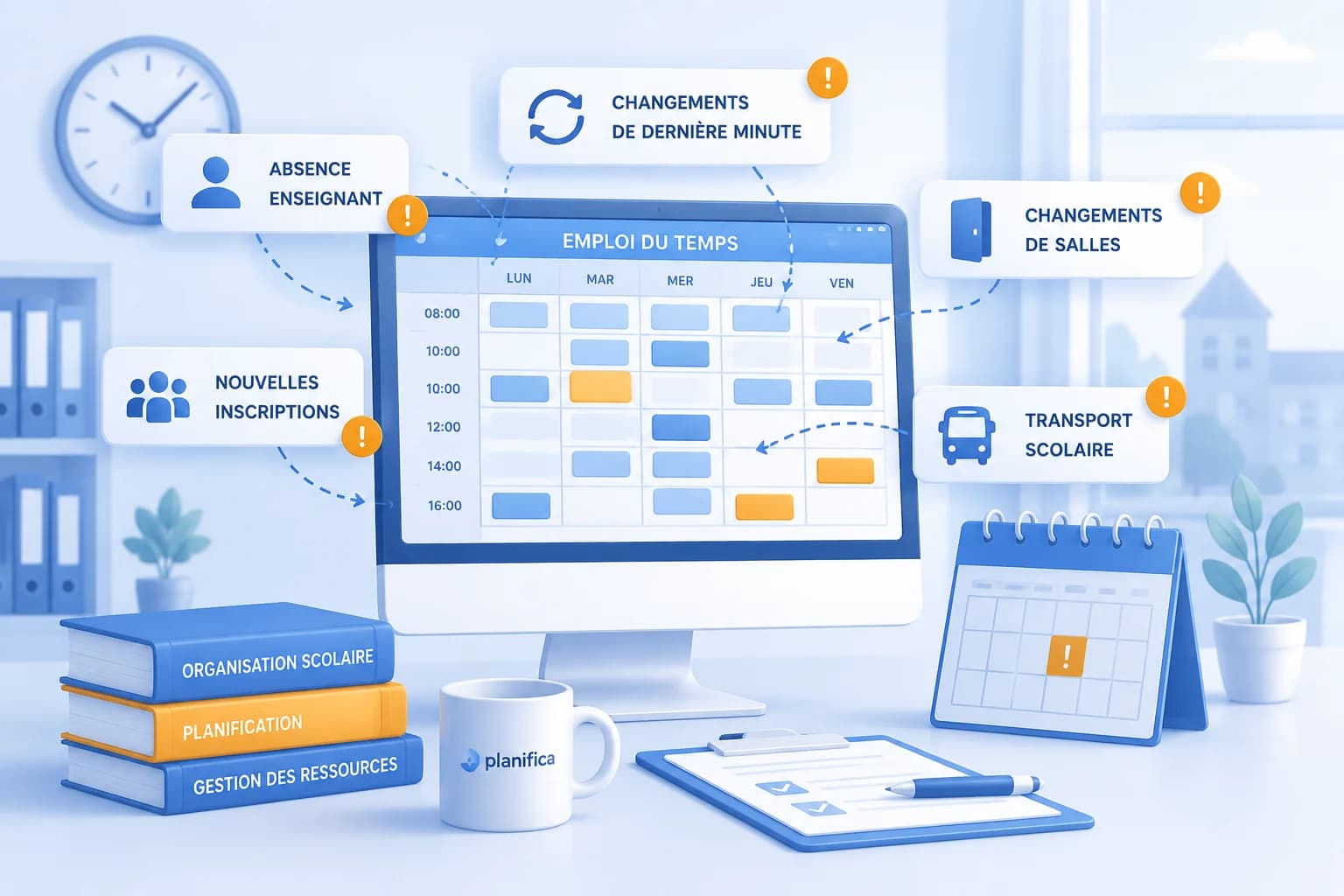
Timetable management, coordination with colleagues, administrative follow-up, last-minute substitutions, meetings, and organization of teaching resources have become essential activities in the operation of modern schools.
But how much space do these tasks really occupy in teachers' work? International statistics now make it possible to better understand this reality.
A Workload That Goes Far Beyond Classroom Hours
When we talk about teachers' working time, we naturally think of the hours spent in front of students. Yet teaching is only one part of their responsibilities.
Lesson preparation, grading assessments, communication with families, pedagogical meetings, and administrative tasks are added to their daily activities.
According to the TALIS international survey (Teaching and Learning International Survey) conducted by the OECD, teachers spend on average around 6% of their working time on administrative tasks. This percentage may seem limited at first glance, but it represents several hours each week, on top of an already substantial workload.
In some contexts, this administrative load is perceived as one of the main sources of professional pressure.
When Organization Becomes a Source of Stress
International studies show that teachers' professional stress does not come only from pedagogical activities.
OECD data indicates that around one in two teachers considers administrative tasks an important source of stress.
This situation is explained in particular by the multiplication of organizational obligations:
- timetable management;
- administrative follow-up;
- coordination between teams;
- exam preparation;
- institutional communication;
- unexpected event management.
The more complex a school becomes, the heavier the organizational workload gets.
In some cases, pedagogical teams spend more energy solving logistical problems than focusing on their primary mission: teaching.
Where Is Time Really Consumed?
Organizational workload does not come from a single activity. It results from the accumulation of many tasks that, taken individually, may seem minor.
Substitution Management
When a teacher is absent, the institution must quickly find a solution.
This situation often involves:
- identifying a substitute;
- checking availability;
- reorganizing lessons;
- communicating with the classes concerned.
A single absence can generate several hours of coordination.
Timetable Changes
Last-minute changes are frequent in schools.
They may be linked to:
- new enrollments;
- exceptional events;
- exams;
- room unavailability;
- specific pedagogical constraints.
Each change requires checks to avoid conflicts between teachers, classes, and resources.
Pedagogical Coordination
Schools operate through collaboration between several stakeholders:
- teachers;
- pedagogical coordinators;
- management;
- administrative staff.
This coordination is essential, but it also represents a significant time investment.
Resource Management
Specialized rooms, laboratories, sports equipment, and IT equipment must all be planned and used efficiently.
The more specific resources an institution has, the more complex their management becomes.
The Invisible Cost of Disorganization
When organizational constraints accumulate, their consequences go far beyond simple time loss.
Inefficient organization can lead to:
- increased stress;
- more frequent errors;
- planning conflicts;
- reduced visibility for teams;
- less time devoted to pedagogical activities.
These effects are often progressive and go unnoticed until they become a real obstacle to the institution's operation.
A Global Challenge for Education
This issue does not affect only a few isolated institutions.
According to UNESCO, the world will need 44 million additional teachers by 2030 to meet global education needs.
In this context, improving working conditions becomes a major issue.
Reducing unnecessary administrative workload, simplifying organizational processes, and improving planning do not only save time. These actions also help make the profession more attractive and improve the well-being of education teams.
Planning Is No Longer Just a Timetable Problem
For a long time, school timetables were considered an administrative exercise completed before back-to-school.
Today, that view is no longer sufficient.
Schools must manage an environment that is constantly changing:
- teacher absences;
- changes in student numbers;
- room constraints;
- new pedagogical requirements;
- increased coordination needs.
Modern planning is no longer only about building a timetable.
It means managing a complex set of resources, constraints, and decisions that evolve throughout the school year.
Toward Smarter Organization
The most effective institutions are not only trying to create a conflict-free timetable.
They are trying to build an organization capable of adapting quickly to change while limiting the administrative burden on teams.
This approach is based on several principles:
- centralizing information;
- automating repetitive tasks;
- reducing manual adjustments;
- improving visibility over resources;
- facilitating decision-making.
The goal is not to replace human expertise, but to allow teams to spend more time on what truly matters: supporting students.
Conclusion
International statistics reveal an often underestimated reality: a significant part of teachers' work is devoted to organizational and administrative activities.
While these tasks are essential to the operation of schools, they should not divert teams from their main mission.
In a context marked by growing school complexity and recruitment challenges in education, improving planning and simplifying resource management becomes a strategic issue.
Every hour saved on organizational tasks represents an additional opportunity to invest in pedagogy, student support, and teaching quality.
To go further, read our article on teacher organization challenges in Morocco, explore why school timetables fail after back-to-school, or discover how smarter scheduling treats the timetable as a living system.