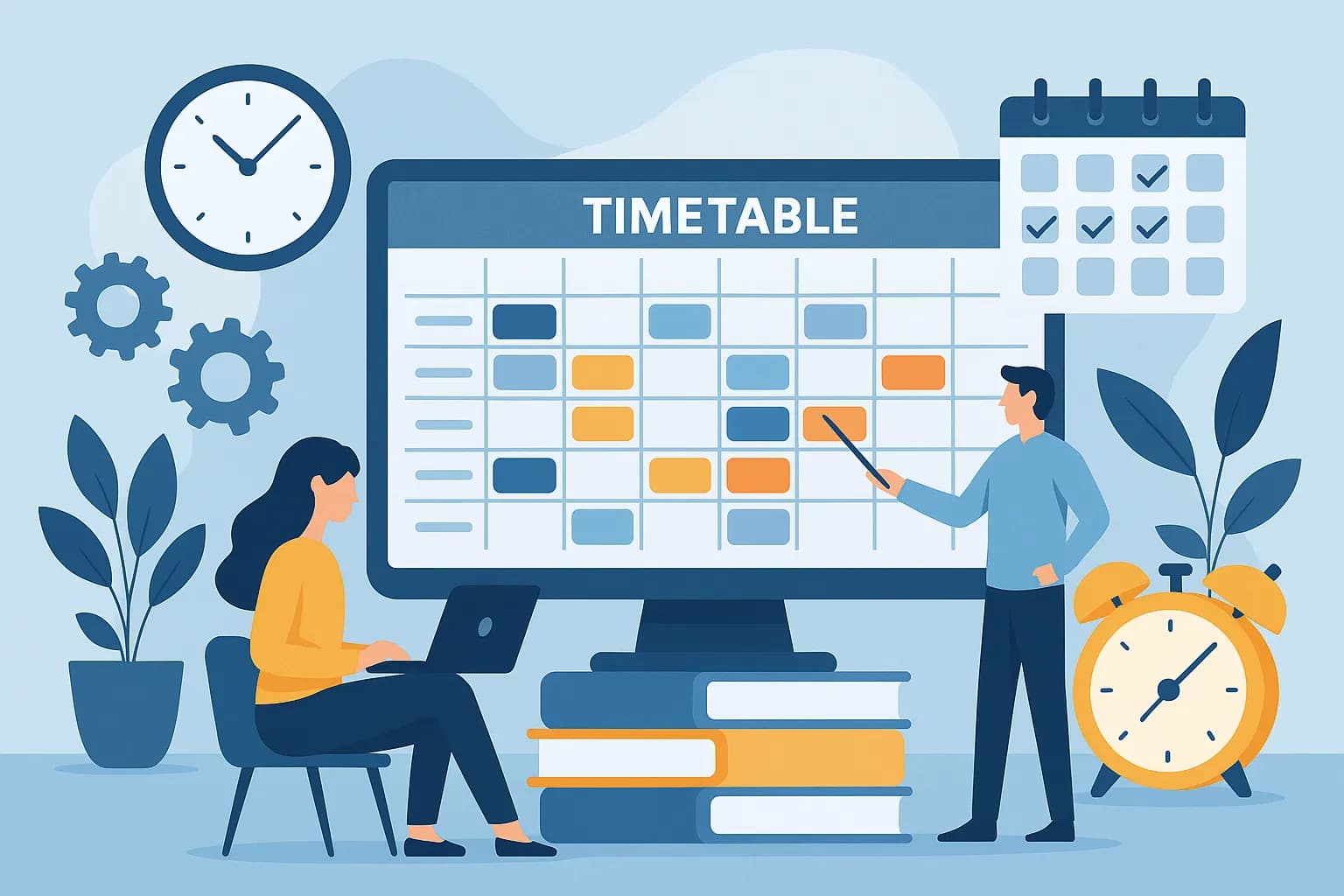
A timetable approved before back-to-school is often only the beginning of the story. Between unexpected events, organizational changes, and new constraints, many institutions quickly discover that their initial planning no longer reflects the reality on the ground.
A Successful Back-to-School Period Does Not Guarantee a Stable Year
Every year, schools spend days, sometimes weeks, building a coherent school timetable. The objective is clear: avoid conflicts, respect teacher availability, distribute subjects properly, and use the institution's resources efficiently.
Yet a few weeks after back-to-school, many timetables already require significant adjustments.
Why?
Because a school is a living environment where constraints constantly evolve.
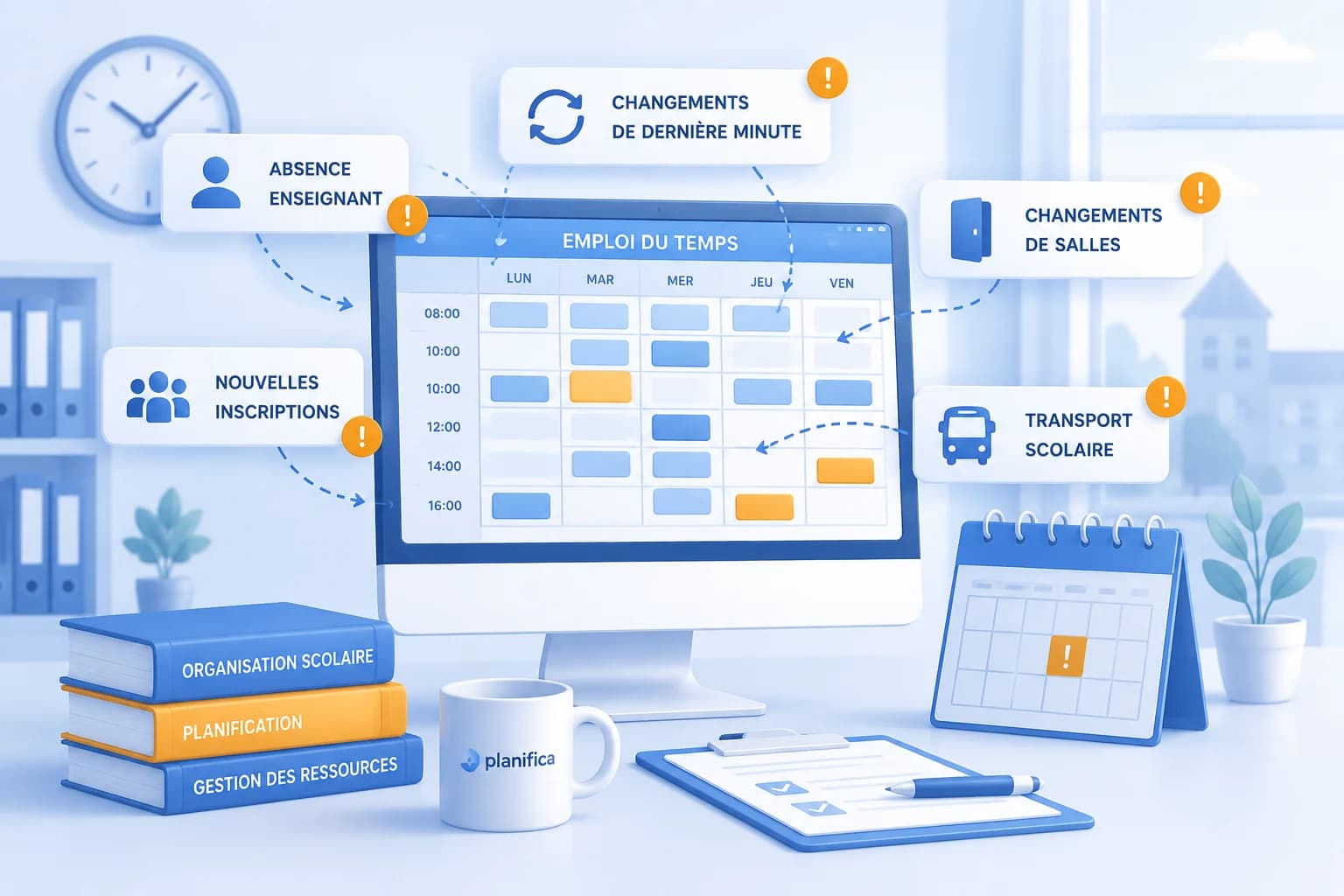
1. Last-Minute Changes Are Inevitable
Even when preparation has been rigorous, some information only becomes available at the last moment:
- changes in student numbers;
- group changes;
- pedagogical adjustments;
- new administrative constraints;
- specific teacher requests.
A change that seems minor can quickly affect several levels, several classes, or several teachers.
When the timetable has been built manually, these adjustments often become complex and time-consuming.
2. Teacher Absences Quickly Disrupt the Balance
Absences are one of the main causes of timetable instability.
Whether the absence is due to:
- sick leave;
- training;
- an administrative assignment;
- an unexpected departure;
the institution must find a solution quickly.
The challenge is not only to replace a teacher. The team must also check:
- the substitute's availability;
- the rooms involved;
- the constraints of other classes;
- the impact on lessons already scheduled.
A single absence can trigger a chain reaction that is difficult to manage without appropriate substitution management tools.
3. New Enrollments Change the Planning
In many institutions, enrollment does not stop on the first day of school.
New students may join the school several weeks after classes have started.
These arrivals can lead to:
- the opening of new groups;
- redistribution of class sizes;
- increased teaching loads in certain subjects;
- additional room or resource needs.
The initial timetable must then be adapted without disrupting the organization already in place.
4. Room Changes Create Additional Constraints
Room availability is often considered stable during the initial planning phase.
In reality, many situations can require changes:
- maintenance work;
- temporary unavailability of a laboratory;
- room reassignment;
- exceptional events;
- exams or specific activities.
When several subjects depend on specific resources, such as laboratories or computer rooms, even a small change can affect several timetables at once.
5. School Transportation Directly Influences Timetables
School transportation is often managed separately from academic planning.
Yet the two are strongly connected.
A change in routes, vehicles, or pickup times can directly affect:
- student arrival times;
- class start and end times;
- organization of extracurricular activities;
- late arrival management.
The larger the institution, the more essential coordination between transportation and planning becomes.
6. Substitute Teachers Can Change Availability During the Year
In many institutions, temporary or part-time teachers work according to availability that can change abruptly during the school year.
A job change, a new assignment, a personal constraint, or a professional adjustment can modify their available time slots, sometimes in the middle of a term.
These changes are especially difficult to manage because they do not only affect the teacher. They can also impact:
- the existing structure of lessons;
- students' free half-days;
- family organization;
- extracurricular activities already planned;
- the overall stability of the timetable.
For example, when a class has a free half-day, parents may already have enrolled their children in sports, arts, or tutoring activities. Changing that half-day during the year can therefore create significant inconvenience for families.
This is why managing substitute teacher availability must be integrated into a flexible planning logic, capable of adjusting certain elements without disrupting the entire existing organization.
The Real Problem: A Static Timetable in a Dynamic Environment
Most difficulties do not come from poor initial planning.
They appear when the timetable is designed as a fixed document while the school environment continues to evolve.
A high-performing timetable must be able to:
- absorb unexpected events;
- adapt quickly to changes;
- preserve pedagogical constraints;
- limit the impact on teachers and students.
In other words, the question is no longer only how to create a timetable, but how to make it evolve throughout the year.
Toward More Flexible Planning
The most effective institutions now adopt a different approach to school organization.
Instead of manually rebuilding timetables after every change, they rely on tools capable of analyzing constraints, evaluating several scenarios, and quickly proposing coherent adjustments.
This approach not only saves time, but also maintains a stable organization despite unexpected events.
Conclusion
School timetables rarely fail because of their initial design. They become ineffective when they cannot adapt to the daily realities of the institution.
Teacher absences, new enrollments, room changes, transportation constraints, and changing substitute teacher availability are part of the normal life of a school.
The real difference lies in the ability to react quickly while preserving the quality of school organization.
In a context where constraints are increasingly numerous, flexibility becomes as important as optimization itself.
To explore related topics, read our article on smarter scheduling, our guide to school timetable challenges in Morocco, or our update on manual timetable adjustments in Planifica.